"Where error does not exist, breath becomes melody, and the beat defies time."
Jazz is not played to be understood; it is inhabited to let the soul breathe off-beat. Thus begins the pulse of a free-spirited history that travels directly from the basements of Harlem to the contemporary avant-garde. Born from that same unyielding need to inhabit sound, the genre found its initial home in the heart of New Orleans and in the creative underground of New York clubs—from the legendary, improvised jam sessions at Minton’s Playhouse in Harlem to the intimate elegance of the Village Vanguard. It was never a mere academic exercise, but a visceral act of resistance and reinvention, driven by the urgency of collective expression, the risk of syncopation, and the constant dialogue between answering instruments. his musical genre became a philosophy of emancipation, continually reinventing itself decade after decade without losing an ounce of its founding spirit. That same foundational vibration is what now transcends continents to settle into the Buenos Aires scene, turning each encounter into an unrepeatable ritual of virtuosity.
As Miles Davis maintained: “Jazz is not about the notes you play, it’s about the notes you don’t play.” Locally, the Buenos Aires scene also boasts great jazz clubs. Within this map of resistance and encounter, Artlab stands out as an ideal space, equipped with acoustics and high-fidelity technology that allow the complexity and nuances of a live jazz band to shine in maximum expression.
You can find the tickets here.
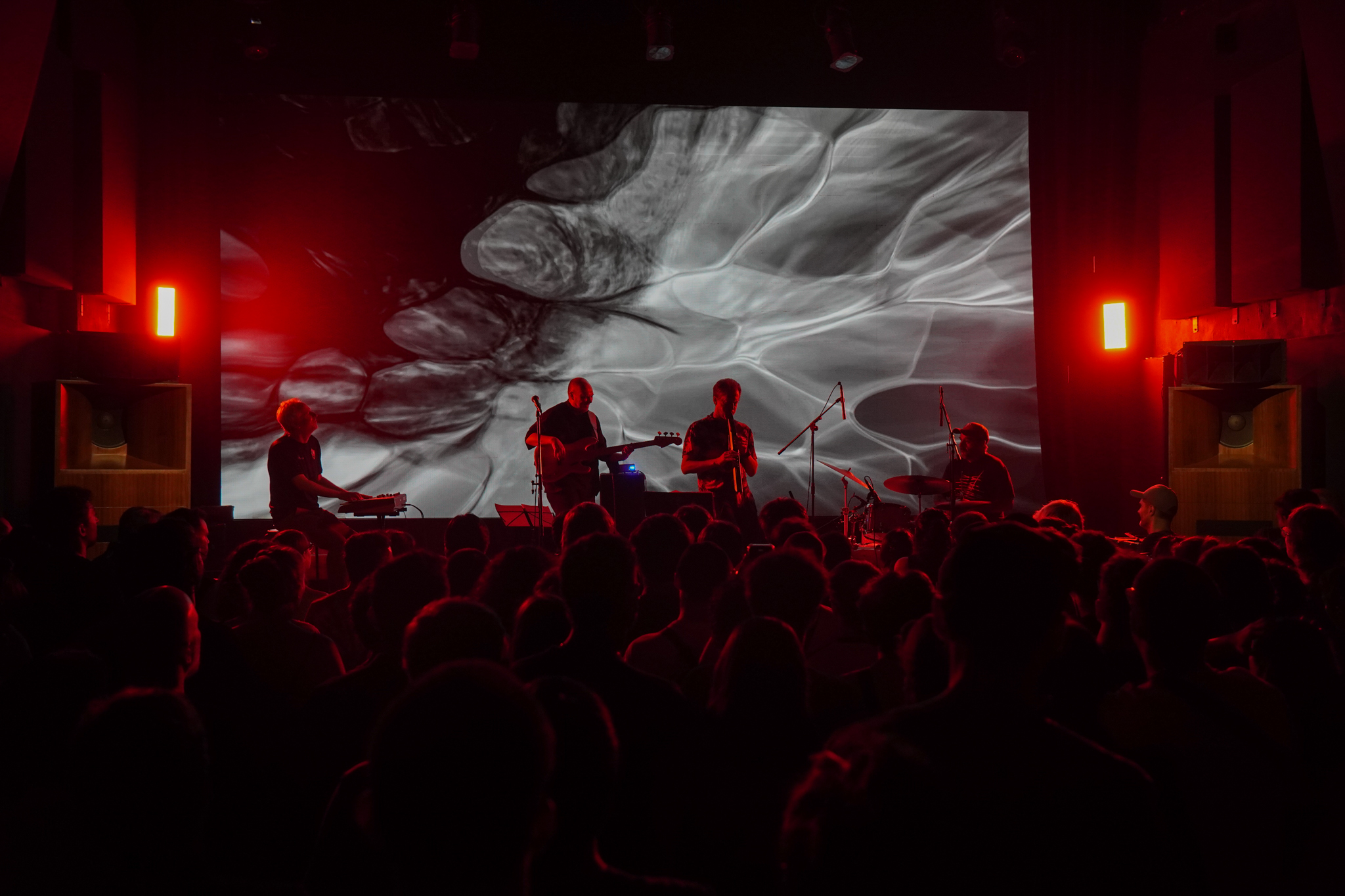
A new gathering place for contemporary jazz
Following the wake of major international temples, Artlab consolidates itself as a fundamental sound laboratory where the genre’s tradition dialogues toe-to-toe with electronic experimentation, contemporary textures, and free improvisation. Through this concert series, the local scene finds a home to connect roots and new sonic experiences, as happened last month with the acclaimed passage of the explosive quintet of Gillespi & Álvaro Torres, who walked through their acclaimed Forma repertoire, expanding the limits of chamber jazz into synchronous terrains and digital textures.
The lineup continues to beat with unusual strength for what is coming this month, bringing together essential exponents who expand the genre’s horizons. On Wednesday the 5th, the stage will welcome Versus, a true powerhouse of talent and sonic exploration composed of an all-star selection: Gustavo Musso displaying his mastery on the EWI to weave futuristic wind textures; Esteban Sehinkman at the synthesizers building bridges between complex harmony and digital groove; Daniel “Pipi” Piazzolla commanding a rhythmic engine as dynamic as it is precise, a fundamental member who also leads his own projects behind the drums, and Mariano Sívori firm on the electric bass, sustaining a deep and visceral pulse. An unmissable date to immerse oneself in the pinnacle of current South American improvisation.
On Wednesday the 12th, the agenda will offer all its magnetism with the presentation of Pájaro de Fuego, the acclaimed project led by Esteban Sehinkman himself, which functions as an authentic sound laboratory where electric jazz merges with experimental rock, analog synthesizers, and enveloping atmospheres as risky as they are captivating.
For the date of Wednesday the 19th, the series will add one of its most powerful stakes with the presentation of the trio led by Pipi Piazzolla, a true master of rhythmic vanguard who, alongside his formation, unfolds a perfect alchemy of vertigo, contemporary swing, and a visceral reading of jazz modernity.
The Sonic Footprint That Transcends Time
The journey that unites historical memory with current effervescence confirms that jazz maintains its power of transformation intact. In this way, Artlab’s offering establishes itself as an essential beacon for experiencing music in its most genuine form, solidifying its position as the jazz club where avant-garde, impeccable acoustics, and the intimacy of great live performances converge, making each event an irresistible invitation to surrender to creative freedom.
In an era dominated by algorithmic immediacy and the clinical precision of digital production, the genre stands as a sanctuary of authenticity that refuses to crystallize into a museum, breathing strongly in these types of spaces, in grand concert halls, and in audacious fusions with electronics and world music.
The frequency remains open; the beat, ready to start all over again.